The Art of Asking Questions
April 15, 2026
Writer: Ruby Chase
Editors: Clio Westhoff & Ava Malkin
Photo: Pinterest
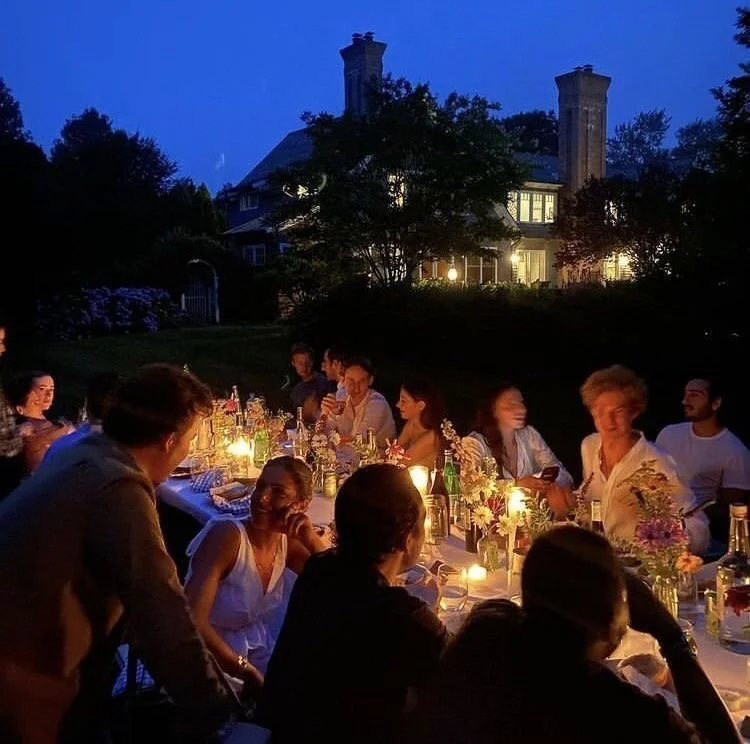
I recently enjoyed dinner with a person whose extraordinary sense of curiosity has stayed with me ever since. Within minutes of meeting me, he had bypassed "what are you studying?" and moved straight to my why: my most sincere reason for pursuing the career path I had chosen. Soon after, he was challenging the entire table to debate whether a husband should financially compensate his wife for staying home. With a mixed bag of people at the table, this question could have gone sideways fast, but instead it went somewhere genuinely fascinating.
Watching him, I realized that the ability to ask a truly good question is an art form, and one most of us struggle to develop.
Part of what holds us back is that we have stopped thinking about what other people can teach us. We move through our days so focused on our own schedules, our own problems, our own noise, that we forget the person sitting across from us is carrying an entirely different set of experiences, opinions, and ideas about the world. Tapping back into that curiosity, the kind we had as kids when everything was worth asking about, is the first step back towards truly meaningful conversations.
Even when we are in tune with our innate curiosity, we may default to the same handful of questions because venturing beyond them can be scary. The other person might find it strange. The conversation might land somewhere uncomfortable. We are afraid of the silence that follows a question nobody knows how to answer. So we stay in the shallow end – majors, hometowns, weekend plans – and then wonder why the conversation felt like a formality.
We must start asking questions to understand people. There is a difference between "where are you from?" and "what do you miss most about home?" One is a data point, the other is an opening.
The most underused question in any conversation is why. Why did you choose that? Why does that bother you? Why do you think that is? It makes people take a pause and reach for something honest. It means they are actually thinking instead of reciting a rehearsed answer. People are not used to being asked why anymore, and that mild discomfort is exactly where the most interesting revelations come from.
Asking good questions is also a practice that compounds. The first time you ask something unexpected, you might stumble through it, but the conversation it sparks becomes material. Now you have more to pull from the next time. Curiosity feeds itself: the more you learn about the people around you, the more genuinely interested you become, and the more naturally the questions start to come. The first real question you ask will lead somewhere you did not expect, and that experience will make you brave enough to ask the next one.
The other ingredient, and the harder one, is comfort with disagreement. The dinner table question about financial compensation within marriage did not land in consensus. But it was not supposed to. The goal was not agreement; it was for everyone to understand more clearly what they actually believed and why. If you can signal to the people you are talking with that you are genuinely curious rather than leading them somewhere, that differing opinions are welcome rather than awkward, then even a room full of strangers can feel comfortable having an honest conversation.
I have not mastered this. I still catch myself reaching for the safe question, the one I know will land smoothly. But I am working on it, adjusting my questions to whoever I am with, what we are talking about, what is happening in the world. Organic, spontaneous, a little risky. Because a good question, asked at the right moment, is one of the most generous things you can offer another person. It says: I want to know what you actually think. I am paying attention. You are worth the risk of a weird question.
So the next time the conversation goes quiet, skip the weather. Ask the why.